Before setting up my blog, I needed to pick a platform. I had a conversation with Claude about this, and what happened was kind of interesting — it turned into a mini research project where the AI did the legwork and I made the final call.
Here is how that went.
Me: “I want to run ads eventually. Which platform should I use?”
I told Claude my goal: build a blog, write about vibe coding and developer side hustles, and eventually monetize with Google AdSense. I asked which blogging platform would be best for that.
Claude immediately said self-hosted WordPress. But I pushed back — what about Medium? Substack? Ghost? Everyone seems to love those. I wanted to understand why WordPress was better, not just take the AI’s word for it.
So Claude started pulling pricing information from each platform. It fetched data from WordPress.com, Ghost, Medium, and Substack. Some of the info was incomplete though — for example, Substack’s homepage did not clearly show their fee structure.
Claude told me: “The pricing pages would be more convincing as screenshots. Can you visit each site and capture them?” So I did. I opened each platform’s pricing page in my browser and sent the screenshots back.
Medium: The AI’s Take vs. What I Saw
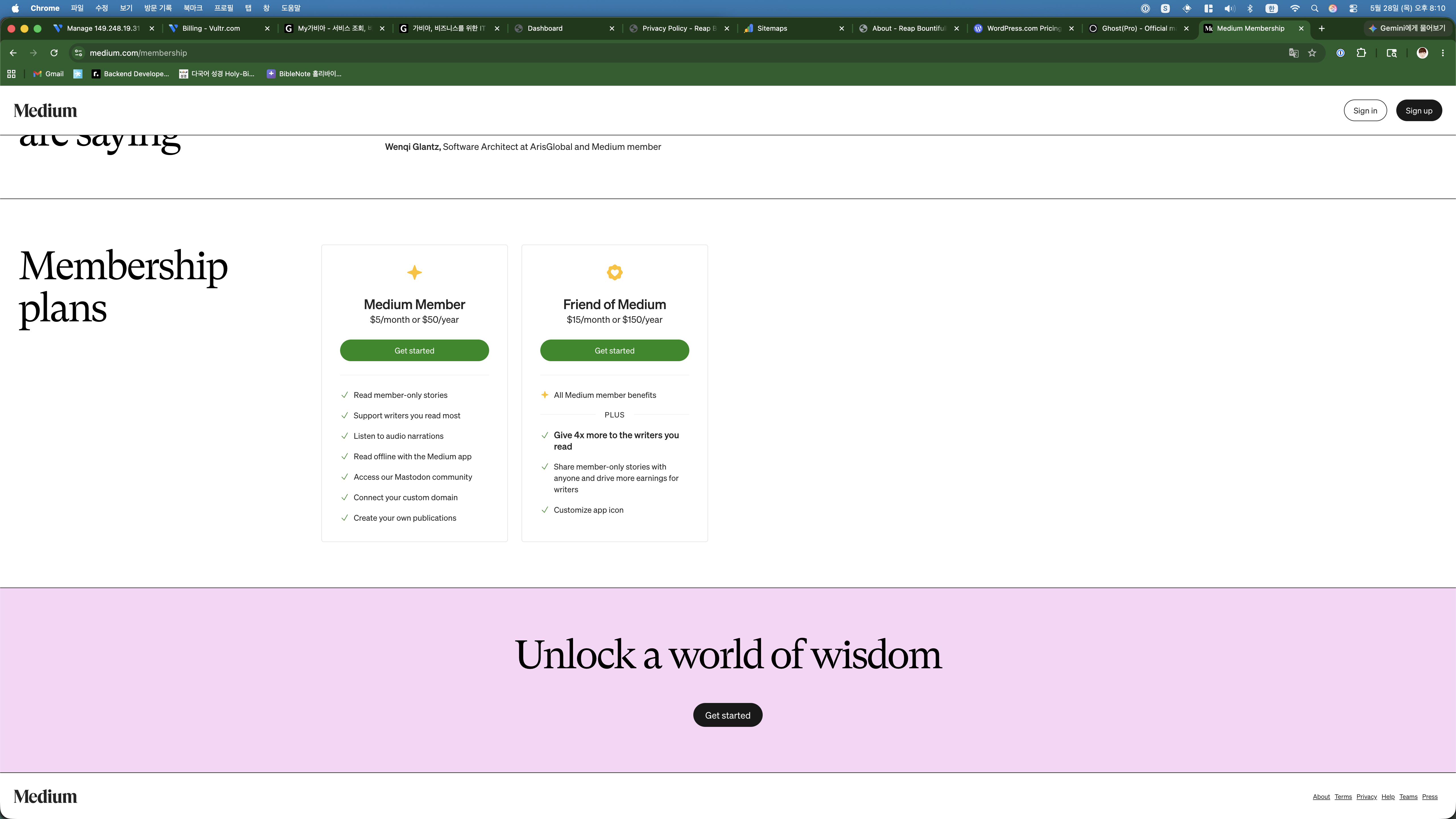
Claude explained that Medium is free for writers, but your content lives on medium.com. You do not get your own domain, you cannot run your own ads, and your SEO juice goes to Medium, not to you. The monetization is through their Partner Program, where you earn based on reading time from paying members.
I asked: “So can I put AdSense on Medium?” Claude’s answer was a flat no. That was basically the end of Medium for me.
Substack: Free But Wrong Tool
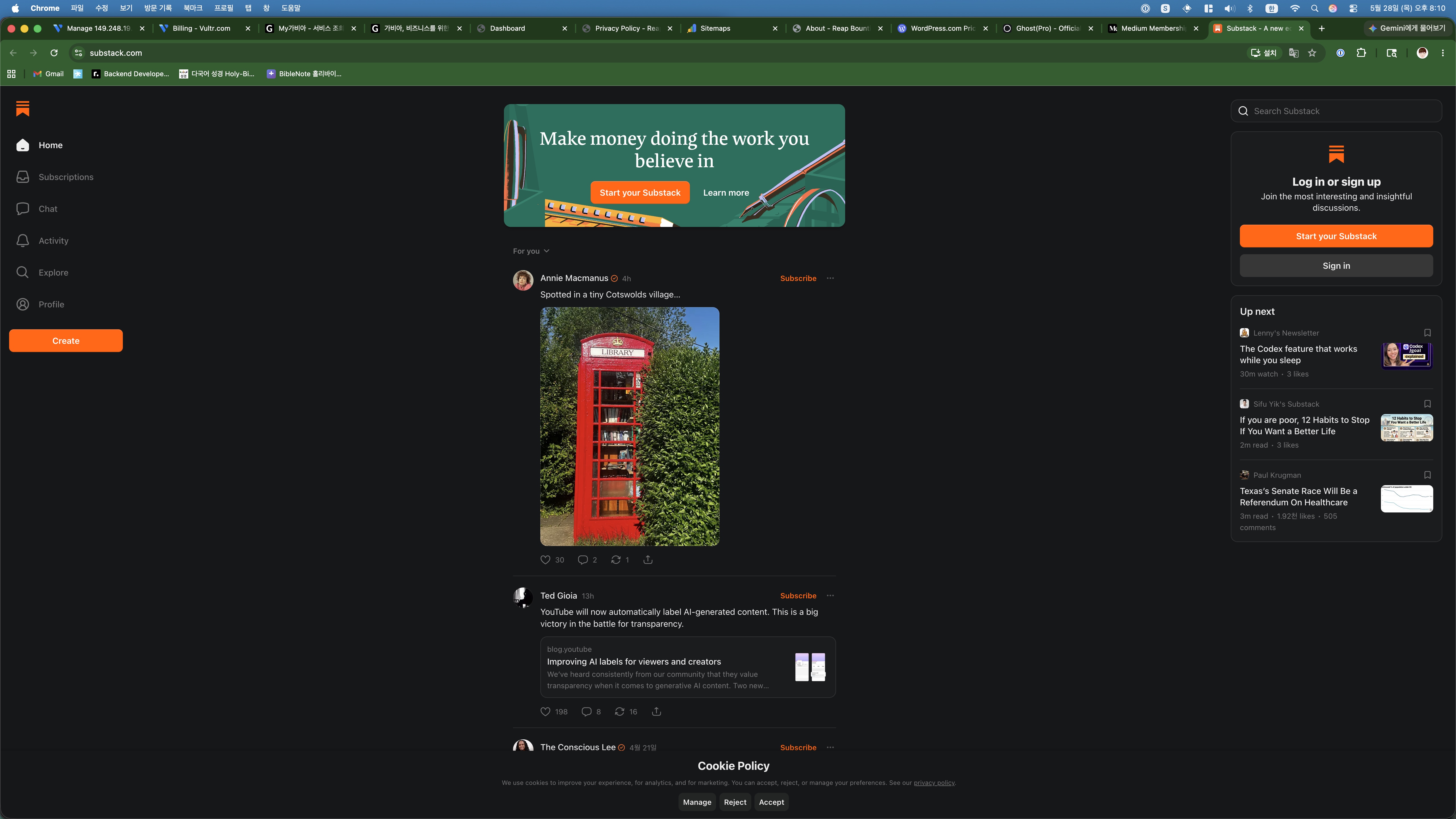
When I sent the Substack screenshot, Claude pointed out something I had not considered: Substack is designed for newsletters, not SEO-driven blogs. It takes 10% of your paid subscriber revenue, which is fair for what it does. But there is no ad support, minimal customization, and the discovery features favor established writers.
I asked Claude if Substack posts rank well on Google. The answer: not really. The posts live on substack.com, and you are competing with every other Substack writer for domain authority. For someone starting from zero who wants Google search traffic, that is a problem.
Ghost: Claude’s Second Choice
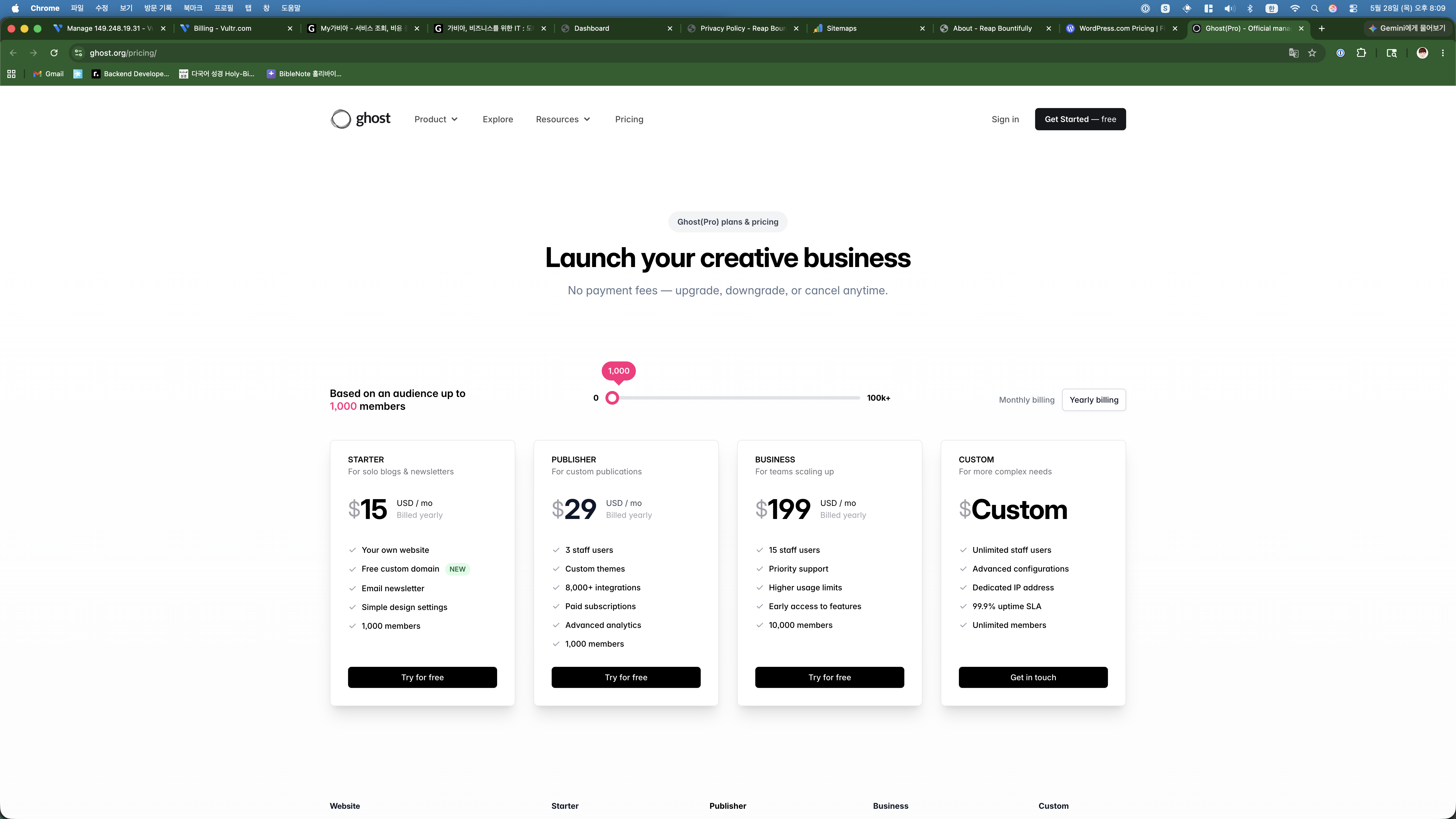
Claude actually had good things to say about Ghost. Open source, fast, clean design, full SEO control with your own domain. It said Ghost was the second-best option after self-hosted WordPress.
But when I sent the pricing screenshot, the numbers told the story. The starter plan is $15/month. For custom themes and better analytics, it is $29/month. I asked Claude: “Can I self-host Ghost instead?” It said yes, but Ghost needs more server resources than WordPress — on my $6 VPS it would be tight.
I also asked about AdSense on Ghost. Claude said it is technically possible by injecting custom code, but it is not a native feature and there are fewer plugins to help. That was the deciding factor.
WordPress.com: The Confusing One
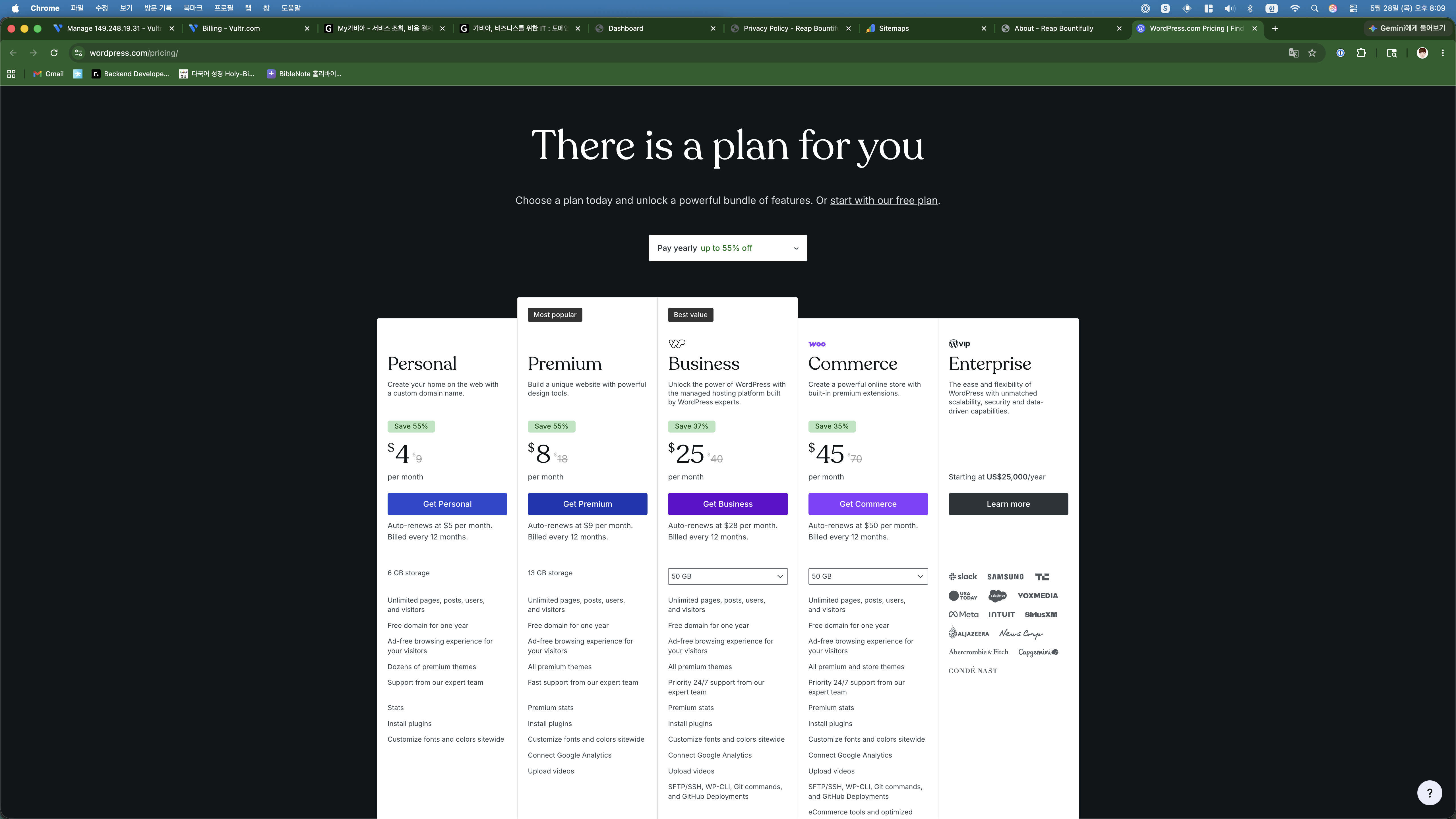
This is where Claude saved me from a mistake. I almost signed up for WordPress.com’s Personal plan at $4/month thinking it was a good deal. Claude stopped me and explained that WordPress.com and WordPress.org are completely different things.
WordPress.com is a hosted service. At the $4/month tier, you cannot install plugins, you cannot run your own ads, and customization is limited. To get plugin support and AdSense capability, you need the Business plan at $25/month.
I said something like: “$25/month for something I can do on a $6 VPS?” Claude agreed — that was exactly its point.
The Decision: Self-Hosted WordPress
After going through all of this with Claude, the choice was obvious. Self-hosted WordPress on a $6/month VPS gives me everything I need:
- Full ownership — my domain, my server, my content
- AdSense ready — paste the code wherever I want
- Full SEO control — Yoast SEO, custom permalinks, sitemaps
- Massive plugin ecosystem
- Total cost: $6/month + ~$10/year for the domain
The only downside is the setup complexity. But as I documented in my previous post, Claude handled the entire server setup. So that downside basically does not exist anymore.
The Comparison (For Quick Reference)
| Feature | Medium | Substack | Ghost Pro | WP.com Biz | Self-Hosted WP |
|---|---|---|---|---|---|
| Monthly cost | Free | Free | $15+ | $25 | $6 |
| Custom domain | No | Paid only | Yes | Yes | Yes |
| AdSense support | No | No | Hacky | Yes | Yes |
| Full SEO control | No | No | Yes | Yes | Yes |
| Plugin ecosystem | None | None | Small | Large | Massive |
| Setup difficulty | Easy | Easy | Easy | Easy | AI did it for me |